
Originally posted on Ghost as Weeknote, August 8: Product Management focus areas, parent-life quests, and a mobility workout.
Work things
- Product Management “zones”, and how we’re collaborating on them at work these days : Technical Product work (Engineering leadership support) vs Problem-Scoping Product (my accountability) vs Operational Readiness Product (Collaboration with Operations managers)
I’ve been functioning as a Product Manager, for a few months now. For those who have worked with me, they know I’ve floated between leading the User Experience function (as a sort of principal designer), and doing a form of product management in each of my long-term jobs (i.e. any of my jobs that have been 2+ years).
This round of it is interesting because I’m working with highly skilled Product leaders, and because we work in a lean team where everyone pretty much “double-hats” as something, we’ve found ourselves partioning the Product role into those aspects above (plus another facet being Product marketing or Growth, that we aren’t actively specializing in, at the moment.)
2. How do people plan features without quantitative data and observational learning?
That’s a rhetorical question.
I think it’s my favourite aspect of Product work. I used to get asked how I use Analytics for UX work, and I acknowledge that it’s quite connected to Product work too:
- Overall engagement
- Tracking performance of key actions
- Understanding flow: Where do people get tripped up?
- Remembering “key man risk”. (Because of a friend’s story)
When I was working at a corporation/ conglomerate, one of the main people management concepts that stuck with me was “key man risk” (The…project management version of one my most influential boss’s [morbid] “bus test”).
I worked in a division with 30-50 people, and HR would track our team’s “employee retention”. And, like in most teams, there were pockets or waves of resignations over time.
What I disliked about the retention tracking was that it did not have a qualifier, or a “resignation quality indicator”.
It should be some form of a “key man retention tracker” (I can’t think of a better phrase right now, but the phrase should ideally encompass more than just the “key” people alone – since that’s not enough to run an organization). What I mean is:
- If your organizational culture is improving, and then 5% of your department leaves because the improved culture isn’t going well for them (e.g. increased transparency and accountability is something they would rather not handle), then their resignations are not actually a problem.
- You shouldn’t be trying to hit 100% retention blindly. (That logic may apply to any goal you’re intentional about haha).
- You should only be tracking retention of the people you’re willing to fight for, people who actually would have wanted to build the team, and with whom you want to build the team.
Life things
- Used a Dan Koe strategic life planning prompt*. It’s been great for keeping track of life “quests”.
- More specifically, I needed to remind myself to go back to Montessori principles for my child’s growth.
- I need to go back to my behaviour of “following the child”. It seemed easier before when she was in her younger days.
- These days, as she grows, it’s keeping up with her desire to watch more Youtube, while trying to keep her engaged in longer-form content.
- She also wanted to watch Supernatural Academy. Which has cool-looking characters. But the first episode basically talks about relationships and people making out for like 40% of screentime 🙄
*I did the prompt some weeks back, but I was able to see the benefit once I went back to it after a month to provide feedback/ direction.
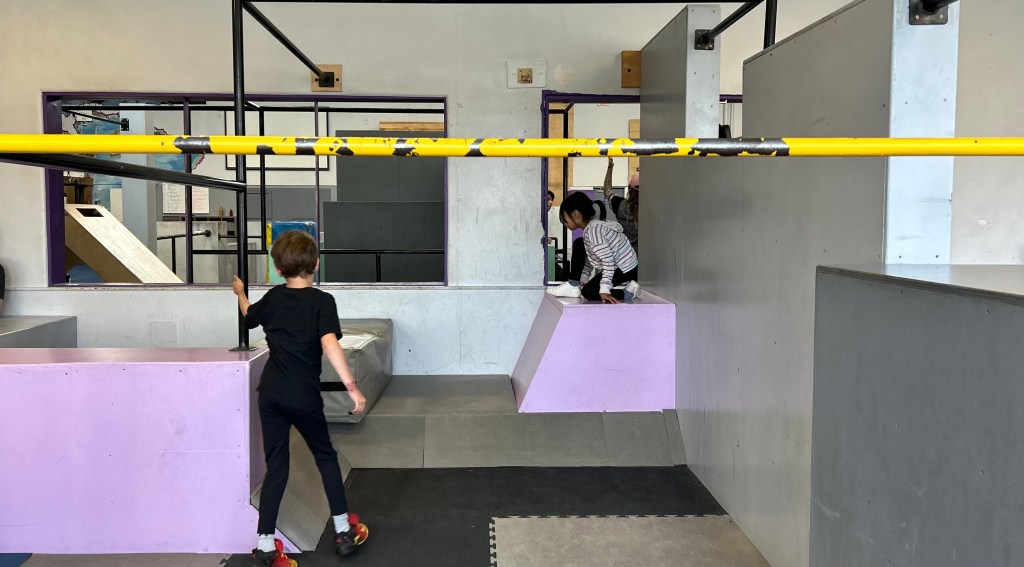
- Tried side flips in parkour. It was highly amusing, because as A. pointed out – I’ll finally face a “non-gymnastics” flip 😂
- It was so disorienting to try flipping sideways. But, yay for fun body movement time.
- I was so sore the next day, and this really helped:
Thank you, again, Julia Reppel!
 ao
ao 
Leave a comment